
MATERIAL RANGE
EPDM
Water, steam, weather and ozone resistance.
EPDM Rubber Material for Custom Seals
EPDM is commonly selected for hot-water systems, steam service, outdoor equipment, automotive cooling systems and selected acids, alkalis and polar fluids. It is generally not recommended for petroleum oils, fuels or hydrocarbon solvents. Final material selection should be based on temperature, pressure, contact media, exposure time and required certifications.
The descriptions and qualitative ratings on this page are general EPDM material-family guidance, not verified specifications or performance guarantees for a particular compound.
Have a drawing, sample or operating condition? Let us review your EPDM sealing requirements.
Request an EPDM Quote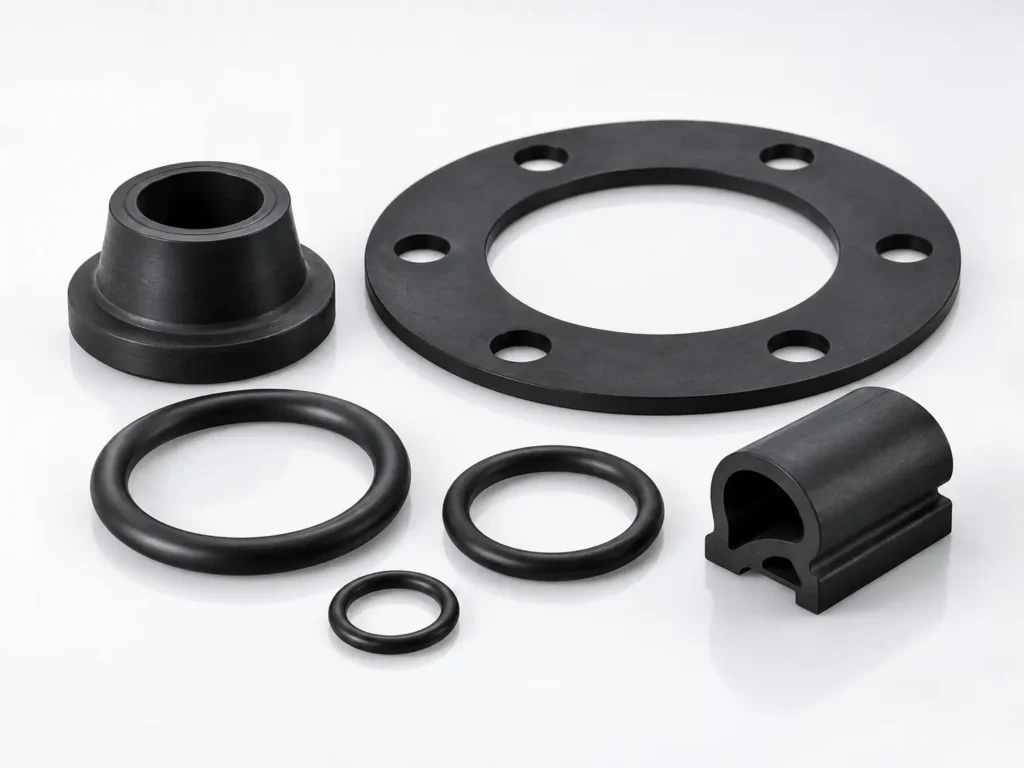
EPDM Rubber Material Information
- Common Name
- EPDM Rubber, EP Rubber
- Chemical Name
- Ethylene Propylene Diene Monomer Rubber
- ASTM D1418 Designation
- EPDM
- Typical Temperature Range
- Service temperature depends on the selected compound, contact media and exposure conditions. Use compound-specific data for design limits.
- Key Material Advantages
- Excellent resistance to ozone, UV exposure, weathering, hot water, and steam.
- Media Compatibility
- Well suited for water, steam, dilute acids, alkalis, phosphate-ester fluids, and outdoor sealing environments.
- Common Sealing Applications
- Custom EPDM O-rings, gaskets, molded rubber seals, water seals, and outdoor equipment seals
Typical Physical Properties of EPDM Rubber
- Elongation:
- Elongation depends on formulation, cure and test conditions; use the selected compound data sheet.
- Hardness Range (Durometer Shore A):
- Specify hardness for the finished compound and part function; the EPDM designation alone does not define a hardness range.
- Tensile Strength:
- Tensile strength depends on the finished formulation and test conditions; confirm it against project requirements.
- Typical Temperature Range:
- Define the operating temperature together with contact media, exposure duration and the selected compound.
Typical Mechanical Properties of EPDM Rubber
- Compression Set Resistance
- Good, depending on compound formulation and curing system.
- Abrasion Resistance
- Good for general sealing applications.
- Impact Resistance
- Very good, with strong flexibility and impact recovery.
- Resilience and Rebound
- Good across a wide range of sealing applications.
- Tear Resistance
- Fair to good, depending on hardness and compound formulation.
- Flame Resistance
- Standard EPDM has limited flame resistance. Flame-retardant compounds require special formulation.
- Flex-Crack Resistance
- Very good resistance to repeated flexing and outdoor exposure.
Typical Thermal Properties of EPDM Rubber
- Typical Minimum Service Temperature
- Low-temperature suitability requires compound-specific flexibility and sealing assessment.
- Typical Maximum Continuous Service Temperature
- Continuous service limits depend on the compound, contact media and exposure duration.
- Short-Term Heat Resistance
- Short-term heat exposure requires compound-specific evidence and application review; no general peak rating is assigned here.
Typical Environmental Resistance of EPDM Rubber
- Ozone Resistance
- Excellent
- UV and Sunlight Resistance
- Excellent
- Weathering Resistance
- Excellent
- Water Resistance
- Excellent
- Steam Resistance
- Very good, depending on temperature and compound formulation
- Oxidation and Aging Resistance
- Excellent
- Gas Permeability
- Fair; EPDM is not normally selected as a low-permeability barrier material
EPDM Rubber Chemical Resistance
- Water and Steam
- Excellent resistance to hot and cold water. Steam compatibility depends on temperature and compound formulation.
- Dilute Acids
- Good to excellent resistance to many dilute acids under moderate operating conditions.
- Alkalis and Caustic Solutions
- Excellent resistance to many dilute alkalis and alkaline cleaning solutions.
- Ketones
- Good resistance to acetone and methyl ethyl ketone under many application conditions.
- Phosphate-Ester Hydraulic Fluids
- Good to excellent compatibility with many phosphate-ester fire-resistant hydraulic fluids.
- Alcohols, Glycols and Salt Water
- Good to excellent resistance in many sealing applications.
- Petroleum Oils, Fuels and Hydrocarbon Solvents
- Generally not recommended for gasoline, diesel fuel, mineral oil, kerosene, toluene, and similar hydrocarbon media.
Chemical compatibility varies with compound formulation, fluid concentration, operating temperature, pressure, and exposure time. Confirm the actual service conditions before material selection.
Recommended Storage Conditions for EPDM Rubber Products
- Storage Temperature
- Follow the compound supplier storage-temperature recommendations and keep parts away from heat sources.
- Storage Environment
- Keep EPDM rubber products in a cool, dry, clean, and well-ventilated indoor environment.
- Light and Heat Protection
- Protect products from direct sunlight, ultraviolet light, heaters, open flames, and other heat sources.
- Ozone Protection
- Keep away from ozone-generating equipment, including electric motors and high-voltage electrical equipment.
- Protective Packaging
- Retain sealed or protective packaging to limit exposure to dust, moisture, oxygen, and contamination.
- Chemical Isolation
- Prevent contact with oils, fuels, solvents, cleaning chemicals, and incompatible packaging materials.
- Deformation Prevention
- Store O-rings, gaskets, and molded rubber parts without stretching, compression, folding, or distortion.
- Inspection Before Use
- Inspect stored products before installation. Storage life varies by compound, packaging, and storage conditions.
Benefits of EPDM Rubber
- Excellent Ozone and UV Resistance: Outdoor performance depends on the compound and exposure conditions.
- Outstanding Weather Resistance: Resists oxidation, moisture, and long-term environmental aging.
- Strong Water and Steam Resistance: Well suited for hot water, moisture, and compatible steam applications.
- Broad Chemical Compatibility: Performs well with many dilute acids, alkalis, alcohols, glycols, and phosphate-ester fluids.
- Wide Temperature Flexibility: Retains useful flexibility and sealing performance across changing temperatures.
- Durable Sealing Performance: Sealing performance and service life require assessment of the actual compound, part design and operating conditions.
- Custom Manufacturing Options: EPDM is used in O-rings, gaskets, molded seals and profiles. Discuss the required part and compound specification; availability requires project review.
Applications of EPDM Rubber
- Water and Wastewater Systems: Used for O-rings, gaskets, valve seals, pump seals, and piping components.
- Automotive Cooling Systems: Suitable for coolant seals, radiator gaskets, heating circuits, and water-system components.
- HVAC Equipment: Used in heating, ventilation, air-conditioning, and refrigeration sealing applications.
- Outdoor Equipment: Consider for outdoor sealing subject to compound-specific weathering and service requirements.
- Electrical Enclosures: Used for moisture-resistant gaskets, cable seals, and protective sealing components.
- Household Appliances: Suitable for washing machines, dishwashers, water heaters, and other water-contact appliances.
- Industrial Water and Steam Equipment: Used in compatible pumps, valves, pipelines, tanks, and processing equipment.
- Food and Pharmaceutical Equipment: EPDM may be considered for certain equipment seals. Food-contact, hygienic or pharmaceutical suitability must be established using the specific compound, required testing and applicable regulatory requirements; no such qualification is implied.
- Custom Rubber Components: EPDM is used for O-rings, gaskets, profiles, diaphragms and molded parts; confirm the specific design and material requirements before procurement.
EPDM Options by Hardness
Select an EPDM hardness according to part design, sealing requirements and required flexibility.
Soft EPDM Compounds
Lower-hardness compounds may be considered where greater flexibility is needed. Define the required hardness and verify sealing behavior for the part.
Discuss Your ApplicationMedium EPDM Compounds
Select hardness to balance flexibility, assembly and sealing requirements using compound-specific data.
Discuss Your ApplicationHard EPDM Compounds
Higher-hardness compounds may be considered where greater resistance to deformation is needed. Confirm the part and load requirements.
Discuss Your ApplicationEPDM Options by Cure System
Choose an appropriate EPDM cure system according to operating conditions and required performance.
Specification and Application Options
EPDM materials can be selected according to specifications and actual operating conditions.
EPDM Specification Review — ASTM D2000
Provide the complete ASTM D2000 callout for review. Suitability and ability to meet the specification require confirmation; no compliance or qualified compound is claimed here.
Submit Your SpecificationApplication-Specific EPDM
Material selection based on temperature, media exposure, pressure and sealing conditions.
Request Material ReviewProject-Specific EPDM Review
Provide project requirements for material selection review. Custom formulation development and supply capability require separate confirmation.
Need a Custom EPDM Rubber Solution?
Send us your drawing, sample, material specification or operating conditions. DAWNION can review your requirements and discuss material selection, sampling feasibility and quotation options based on the project.